Sunday, September 30, 2007

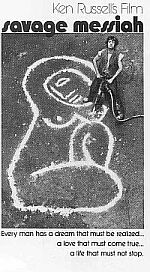
Savage Messiah (1972)


(Directed by Ken Russell, UK, 1972)

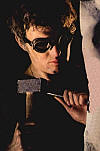
"Savage Messiah" is an intriguing film from director Ken Russell. After a trio of great films: "Women in Love", "The Music Lovers" and "The Devils", "Savage Messiah" was a failure. The film depicts a fictionalized version of the pre-modernist artist and sculptor Henri Gaudier (as played by Scott Antony). At the very beginning of Russell's film he meets a Polish poet Sophie Brezska (played by Dorothy Tutin) in the Bibliotheque National in Paris and they lived together in London, he eventually co=opted her name to his, and is now known as Henri Gaudier-Brezska.

If one can get past the annoying British accent of Antony's portrayal of Gaudier, the film is a rather high-spirited portrait of an artist trying to defy poverty and create. While not a strict bio-pic on an artist, Russell tries to give a visual rhapsody of the artist creating in an absolute vacuum, combining a total lack of recognition on the part of British art critics and snobs of the Edwardian period and the existence of an artist's absolute poverty. While not at all true to life, (what Ken Russell movie is?) it is exhilarating to watch, as an invention of one filmmaker's response to an artist he truly admires. The highly visual sets support this, (thanks to Derek Jarman, set designer for this film): several scenes take place in a garret reminiscent of a setting for the "Lower Depths" and a 'Vorticist' nightclub that wouldn't be out of place in a German Expressionist film (say "Cabinet of Doctor Caligari").
Helen Mirren is on hand in one of her early roles as a suffragette, and an unlikely patron of the sculptor.

"Savage Messiah" ends abruptly with the mention of Gaudier's death during the First World War and the camera cuts several times to Brzeska crying and to a memorial exhibit of the sculptures. It's a very moving sequence, visually taking Gaudier-Brzeska's sculptures from the realm of the film into the here and now. The sculptor was one of the more unfortunate casualties from the First World War, he died an early death at the age of 23.

This film deserves to be seen, and is ripe for a re-evaluation, at least as a genuine DVD release. I can't think of any other film on an artist that is so joyful, so crazy and so colorfully vivid as this film.

Sunday, September 9, 2007

Halloween (2007)


(Directed by Rob Zombie, 2007, USA)

Usually I try to never see sequels because I am sure to be disappointed.While having very fond memories of John Carpenter's Halloween (1978), I guess I should have stuck to my basic rule: NO WATCHING REMAKES.

Rob Zombie's Halloween starts off with good intentions, but doesn't go anywhere. Yes, we see the young teen Michael Myers with his unhappy homelife: drunk stepdad (William Forsythe), slutty sis Judith (Hanna Hall), lil' baby Boo and stripper Mom (the ever watchable Sheri Moon Zombie). The first act of the movie focuses incessantly on the young 12 year old Michael Myers and his upbringing: torturing and killing animals and eventually turning on the people who pick on him at school. He comes under the care of Dr. Samuel Loomis (Malcolm McDowell) and eventually is institutionalized after the usual family blood bath. Everyone is killed except for stripper mom and baby. Needless to say, little Mikey is sent to a state hospital for the criminally insane.

Fifteen years later, Mikey Myers gets out to wreak his revenge by going home. There is very little connection to why Michael Myers returns home: he's (I think) looking for the baby girl (?), his sister and doesn't care who gets in his way. Typical slasher mayhem ensues. It's incredibly not interesting.

It was very hard for me to watch this tepid remmake without thinking about John Carpenter's original: with a lesser budget than this movie and practically no special effects. This remake was the ultimate curse of a horror film: it was dull, and just not really interesting, not even in its climax. By focusing on how Michael Myers became the killing machine, the director neglected one basic fact: we want our horror movie killers to be killers, not have some mopey, artsy background, explaining why they did it, what turned them into this....blah blah blah. The final girl was no Jamie Lee Curtis either: in the original, Curtis is resourceful; here in the remake, the girl screams a lot, lets the kids she's babysitting to fend for themselves and you really don't care.

Stick with Carpenter's original, you won't go wrong.

Friday, August 31, 2007

No End In Sight (2007)


(Directed by Charles Ferguson, 2007, USA)

"No End in Sight" is an amazing documentary about the aftermath of the Iraq War, from the US involvement post-9/11/2001 to the current Iraqi Occupation. There are various interviews with former Washington 'insiders': generals, government officials and a few marines, giving their views and insights on the occupation. While wisely not focusing on the reasons the Bush Administration went to war, the documentary instead gives an indictment of the failure of this current administration's foreign policies in regards to Iraq and the calamity that followed: poor planning and bad decisions that led to the intensification of conflicts between Shi'ite and Sunnis and the ultimately ruinous decision to disband (not disbar) the Iraqi military.

It is difficult to watch this documentary and not feel anger and disgust at the incompetence and sheer stupidity of the Bush Administration in allowing Iraq to completely disintegrate into its current fragmented state. Yet, there are clips of Donald Rumsfeld saying that he "doesn't do quagmires" and using the dictionary for the definition of that word. How disgusting is that? Reports are compiled by administration experts and parsed into one page summaries that an arrogant president not only does not read, yet speaks at a news conference that the report information is 'not factual'. One of the most chilling episodes is home video footage of government approved private contractors shooting at Iraqi civilians on a road while Elvis sings "Mystery Train", just another hunting day for Haliburton or other corporate warmongers.

This documentary was shown at the Film Forum, the evening I went there were six people in the audience; in an ideal world there should have been more. This documentary shows what went wrong and, without pointing blame, it gives you the answers for who is ultimately responsible: our no-accountability administration.
It deserves to be seen and given as wide a release as Michael Moore's Sicko.

Lacombe, Lucien (1974)


(Directed by Louis Malle, 1974, France)


Lacombe, Lucien is a powerful study of life under the Vichy Occupation of France, during the waning years of the Second World War. Lucien (Pierre Blaise) is a country hick who tries to get involved with the Resistance and, failing that, goes to work with the local collaborators. Being a young, naive farmboy hick, he does not realize the implications of his actions: the first being that he informs on his old teacher, the one who advised him not to join the Resistance.

The Nazi collaboraters are holed up in decadent surroundings in a provincial hotel, wherein (in on of the early scenes) the wife of a police head is reading the daily mail, consisting of notes from informers spying on their neighbors: to make things ever more surreal, there is a letter from a man informing on himself. Lucien becomes a mascot to them and, with the connection of the son of a French nobleman, meets the family of Albert Horn, a Jewish tailor in hiding. He falls in love with Horn's daughter France and there the complications ensue. Lucien is a blank slate, someone so young and stupidly naive, that he has no conscience or judgement on his actions, he just tries to fit in, allowing himself to be used for an ideology that he doesn't bother to comprehend. Completely apolitical, he doesn't bother to register that his actions are noticed by the Resistance movement that rejected him at the beginning of the film. In the course of the film, his actions are devastating to those around him.

This was Malle's first film about the French Occupation, the other being Au Revoir les Enfants. . While the latter film is rather tender (being based on a sad childhood memory of the director), this film is rather tough, rather ominous and open to interpretation. The Criterion release is rather fantastic, cleaned up but without any extras. Thirty years plus later, this is still an important French film, skillfully done and engrossing to watch.

Friday, August 24, 2007

Band of Outsiders (1964)


(Original Title: Bande a Part, Directed by Jean-Luc Godard, 1964, France)

Band of Outsiders is a happy-go-lucky anomaly among Jean-Luc Godard's early 1960's work, made between Le Mepris (Contempt) and Alphaville. The film is a modified gangster story (based on a crime novel) that never quite seems to take itself seriously and contains numerous inside jokes. Two pals Arthur (Claude Brasseur) and Franz (Sami Frey) persuade a student in their school Odile (Anna Karina) to help them commit a robbery at Odile's aunt's home. Along the way there are a few jokes about film sound (Karina feeds a tiger one hears before seeing); a "moment of silence" in which the film's soundtrack goes literally silent. A few classic moments as well that were shamelessly quoted in later films: a run through the Louvre and the ever fabulous fun sequence of the trio dancing "the Madison" in a Paris bistro, complete with requisite voice-over by Godard himself, explaining each characters interior life.


As an almost frivolous 'stylistic exercise' (think Raymond Queneau), Band of Outsiders is a study of a film, but is enjoyable to watch as the film invents and seems to re-invent itself. Godard would only be this playful again in the later film Masculin/Feminin, and would begin to pursue the (then) fashionable Marxist societal critique of his later 1960's work. At least, Band of Outsiders, (besides giving Quentin Tarantino's production company a name), is a 'transitional' film in the work of one of cinema's true innovators. And Karina dances very well too.

The Criterion DVD release is quite commendable: while not containing the usual 'commentary', special features contain a 'behind-the-scenes' short feature with Godard (which contains the only known footage of the making of "Band of Outsiders"), and interviews with long-time Godard cameraman Raoul Coutard and Anna Karina, as well as a silent movie parodic sequence lifted from Agnes Varda's "Cleo from 9 to 5" starring Godard, Karina and Frey.
Now, if only Rialto Pictures could restore "Une Femme Mariee" life would be ....

Monday, August 20, 2007

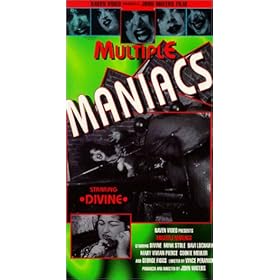
Multiple Maniacs (1970)


(Directed by John Waters, 1971, in lovely Baltimore, USA)

I knew I just couldn't stay away from great trash, so "Multiple Maniacs" was watched again recently, during one of those ever more frequent "there's nothing on TV" nights. As a real cinemaphile, I never saw a John Waters movie until "Polyester" came out with the tacky scratch-n-sniff cards in the early 1980's. I knew right away that Divine was fantastic and I had to see everything Waters did (thanks Steve, I still blame you!). In the words of the late, great Divine: "I've enjoyed every fucking last minute of it!"

This is John Waters' second feature and first talkie with Divine and co. previously there was a short campy film called "The Diane Linklater Story" and the non-sync sound "Mondo Trasho". Divine plays Lady Divine, owning a "Cavalcade of Perversions" overseen by her boyfriend Mr. David (David Lochery) serving as a two-timing ringmaster/emcee. Lochary does a good job trying to entice suburban Baltimore audiences (most of whom play major roles later: Mink Stole, Cookie Mueller, Mary Vivien Pierce) and the sideshow tent focuses on perverted (at the time) acts: two homosexuals engaged in a kiss, a heroin addict going cold turkey, a woman sniffing and licking a bicycle seat and a puke eater (no explanation needed there). The sideshow is just an excuse for Lady Divine to rob the audience (even resorting to shooting a recalcitrant audience member if necessary). Mr. David is about to have an affair with Bonnie (Mary Vivien Pierce)a self-described "auto-eroticist" trying to join the Cavalcade, and Divine tries to keep him in line by telling him he's involved with the Manson family murders, (unsolved at the time of filming), while crashing at her daughter Cookie's apartment (Cookie Mueller), she threatens to tell all. A bar owner (played by Edith Massey in her first Waters film) phones Divine to inform her that her David is fooling around and it sets in motion another cavalcade of perversions involving Divine and the other characters.

Among the many highlights: religious imagery in the form of a little boy dressed ceremoniously as the "Infant of Prague" seen after Divine is raped by a junkie couple (a woman and man in a dress), leading her to a church where she has a 'rosary job' performed by a self-described "religious whore" Mink Stole (don't ask) as the Stations of the Cross are recited. The low rent blasphemy continues as a dream sequence occurs of both "Sermon of the Loaves and Fishes" complete with Wonder Bread loaves, tuna fish cans and later a visual recounting of Christ's crucifixion (with Edith Massey as the Virgin Mother!).


Multiple atrocities abound: Mink and Divine get hassled and then murder a harassing cop, Bonnie shoots Cookie (mistaking her for Divine), Divine kills David and eats some of his entrails, and nearly everyone dies save for Divine who becomes: "A Maniac!" after being raped by a large noisy wooden lobster ("Oh No! LOBSTORA!") To the strains of Holst's "Mars", Divine goes on a Godzilla-like rampage: stealing a car, terrorizing a couple parked on a date, all the while she is dressed in a mink coat and lingerie in what looks like winter. She is finally brought down and shot by the National Guard to the strains of Kate Smith warbling "God Bless America".

This early Waters film is a bit of a satiric time capsule on late 1960's/early 1970's mores, and occasionally works. A lot of the movie is cheap: cheaply shot, acted in one take (with flubbed lines included) and shakily edited. It's not as smooth as later mainstream Waters movies (Polyester, Hairspray, etc.) But there are many endearing moments amid the semi-surreal and campy, sacriligeous plot. The ending I took to be indicative of its time and place, with echoes of 1968 Chicago riots and Kent State. Divine's 'acting' is rather raw here, but you can see the seeds of Babs Johnson or Dawn Davenport in embryonic stage.

It's a fun watch and a must for John Waters fans. It gives a basic blueprint for his later sardonic style, but here it's rather raw. All that and a lobster that creaks like the Coney Island Cyclone.

Thursday, August 16, 2007

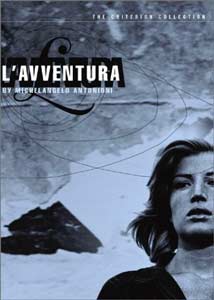
L'Avventura (1960)


(Directed by Michelangelo Antonioni, 1960, Italy)

L'Avventura continues to have a polarizing effect on viewers since its premiere at the Cannes Film Festival 47 years ago: either you like Antonioni's masterpiece or you don't. On the internet movie database page for this film, the plot keywords give it all: unsolved mystery, very little dialogue (a personal favorite), island, missing person, human relationship (perhaps in the plural?) and realization. All of these generalizations just scream out: art house film.

Yes, socialite Anna (Lea Massari) disappears within the first half hour of the film while visiting an island on a cruise with her upper class friends, among them: her fiance Sandro (Gabriele Ferzetti) and her best girlfriend Claudia (Monica Vitti). Her disappearance is never explained, it just happens. Sandro and Claudia remain on the island in an attempt to find her, searching false leads in town; eventually Sandro makes a play for her, Claudia is guilty, and after rejecting Sandro, she decides to be in a relationship with Sandro, he is caught 'in flagrante delicto' by Claudia, and she forgives him.

This synopsis is comically inept, deliberately so (like the plot keywords quoted above). This film is a journey as the title implies, the viewer is along for the ride, as narrative disappears like Anna and Antonioni's style becomes increasingly prevalent during the course of the film. Shots of the barren coast of Sicily are impeccably and beautifully presented, long shots become ordinary and L'Avventura settles into a 'longeur', an epic mood of Italian upper-class 'l'ennui and randomness, nearly shot in real time. At times, on re-watching this film, I felt that Antonioni was attempting to recreate some of the surreal landscapes of the painter Giorgio De Chirico, paintings empty of people, devoid of normal life but containing a focus on absence, therefore rendering the places mysterious. The cinematography by Aldo Scavarda was extremely effective in realizing the dreamlike pace of this film, especially during the search for Anna on the barren Sicilian island. The exterior shots are like a volcanic wasteland, one of the most striking sequences earlry on is of Claudia shouting Anna's name in the rain, surrounded by the rain and rocks.

Monica Vitti's Claudia is an emotional anchor for the film: it is implied that her friendship with Anna might be more intimate, and she is the first one to notice that Anna has disappeared. Her anxiety and fear is portrayed subtly, as well as her disgust initially with Sandro's advances. This is a nuanced performance and Vitti gives a credible performance throughout. I wish I could say the same for the actor Gabriele Ferzetti playing Sandro, although he does seem to come into his own during the second half of the film, his style is a bit too low-key.

One aspect I noticed during this viewing of "L'Avventura" was the way that Antonioni's script focused almost pointilistically on relationships: at the very start of the film, Anna and her father have a tense, inconclusive dialogue, Sandro with Anna before the cruise saying that words are unimportant for them, the casual intimacy mentioned before between Claudia and Anna, the rather callous way that Patrizia parades her affection for other men under the nose of her husband. The subsidiary characters have their moments too: as Sandro follows a lead to a small Sicilian town, the owners of a pharmacy bicker about their memories, you get the feeling that they've been doing it for years and it seems is their only means of communication. One implication I felt on viewing this film is that Antonioni is forcing the viewer to watch the minutiae of daily lives: as this is something perhaps he feels we are programmed into taking for granted. When something happens to disrupt the social fabric: say Anna's disappearance (or in literary parallel Gregor Samsa's transformation), Antonioni seems to suggest life goes on, even with major disruptions. It is rather an existential, cynical view, which is why I believe that only Claudia and Sandro alone from the boating party search for Anna, the others want to get on with their cruise. The other characters are sketchy and seem too self-centered to care for Anna to even bother searching for her, nor (as at the beginning of the film) does Anna care for her social circle and makes it clear (at the very start of the film) that she is rather dissatisfied with her life. Anna's disappearance besides providing the central mystery of L'Avventura, (and the catalyst for the action), is one of the great disruptions in cinema, equivalent to the murder of Marion Crane in Alfred Hitchcock's Psycho: with the main exception that Hitchcock never conceals anything from the viewer in Psycho, Antonioni presents his concealments as matter of fact.

In summary, Antonioni provides us with a film that is open-ended, unresolved. Like most of life, L'Avventura is continuously open to debate and interpretation, after its premiere 47 years ago. How many current films invite us to do that?